
The Tesla Powerwall: Your Home's Best Emergency Generator
Most people don't think about backup power until the grid goes down at 11pm during a thunderstorm. A generator is the traditional answer — a loud, gas-guzzling machine you pull from the garage, hoping it starts, running in the driveway while neighbors glare. There's a better answer built into the NZEL solar farmhouse.
The Tesla Powerwall is a wall-mounted lithium-ion battery that stores electricity from your solar panels. Under normal conditions, it charges during peak solar hours and supplements your home in the evening. In an emergency, when the grid goes down, the Powerwall automatically switches to island mode and keeps your lights, refrigerator, and appliances running without interruption. You might not even notice the grid went out.
Traditional generators run on gasoline you have to stockpile and generate power only as long as you keep feeding them fuel. The Powerwall runs on sunshine. If the grid goes down and the next day is sunny, your solar panels recharge the Powerwall while your neighbors wait for the utility crew. You're not just riding out the outage — you're thriving through it.
In February 2026, our area saw snowstorms it hadn't experienced in nearly 40 years. That was the one month where we owed the utility money rather than the reverse. But we never lost power. The Powerwall bridged every gap, and when panels were running in reduced capacity, we had battery reserves and grid backup to keep the house fully operational.
The Powerwall isn't cheap, but compare it properly. A quality whole-home generator runs $10,000 to $15,000 installed, requires fuel storage and annual maintenance, and makes noise. The Powerwall integrates silently, requires essentially no maintenance, and doubles as your daily energy management system. On a net zero home, it's not an add-on. It's part of the foundation.
What Is Passive Solar Design — And Why Your Next Home Needs It
Passive solar design sounds like something from an architecture textbook. It's actually one of the oldest and most practical concepts in home building — and it costs almost nothing to implement if you plan for it from the start. The basic idea: use the movement of the sun to heat your home in winter and protect it from heat in summer. No panels required. Just geometry.
Here's how it works. The sun sits low on the southern horizon in winter, and high nearly overhead in summer. If you build a deep porch on the south side of your home, the geometry does the rest: the low winter sun shines under the overhang and through your south-facing windows, warming the interior naturally. The high summer sun hits the overhang and never reaches the windows, keeping the house cool. Same porch. Same sun. Completely different effect by season.
Our solar farmhouse in Waxhaw has a seven-foot-deep south-facing porch. On December 13th, I photographed the sunlight streaming across the living room floor well into the afternoon. The passive solar heating was so effective that on mild winter days, the heat pump barely ran. The porch wasn't an afterthought — it was engineered to be exactly deep enough to block summer sun and admit winter sun.
The financial impact of passive solar is invisible in the best way. It shows up in lower heating and cooling bills, smaller HVAC equipment, and a house that feels comfortable at lower thermostat settings. Combined with a high-efficiency heat pump, good insulation, and a solar panel array, passive solar design makes every other energy-saving feature work harder.
You don't have to build a net zero home to benefit from passive solar design. But if you're already thinking about solar panels and proper orientation, you're most of the way there. Come take a free tour of my Waxhaw home and you can stand in the living room and see exactly how it works.
Why South-Facing Matters: The Single Biggest Decision in Solar Home Design
Ask most people what makes a solar home work and they'll say solar panels. They're right, but only halfway. The other half — the half that most builders and most homeowners completely miss — is which direction those panels face. The answer, if you want maximum energy production, is always true south.
Solar panels produce electricity from sunlight. The more direct the sunlight hitting the panel, the more electricity it produces. In the Northern Hemisphere, the sun arcs across the southern sky all day long. A panel facing true south catches that arc from morning to evening. A panel facing east catches only morning sun. A panel facing southwest is leaving serious money on the table.
I proved this with real data. A friend has 22 solar panels facing southwest. I compared production through our Tesla Powerwall apps on identical sunny days. Our 33 south-facing panels produced twice what his 22 southwest-facing panels did. Not a little more. Twice as much. That's the difference between getting a credit from your utility and paying a bill.
The NZEL solar farmhouse was designed around this principle from day one. The home faces true south. The roofline is large, simple, and unobstructed — no dormers, no complicated valleys, just a clean surface that holds all 33 panels in optimal position. The house was oriented on the lot specifically to maximize southern exposure. Everything else followed from that one decision.
When you're looking at land or talking to a builder about a new home, this is the first question to ask: can we orient this house to face true south? If the builder looks at you blankly, that's important information. A home that isn't designed for solar from the start is a home that will always have a power bill.
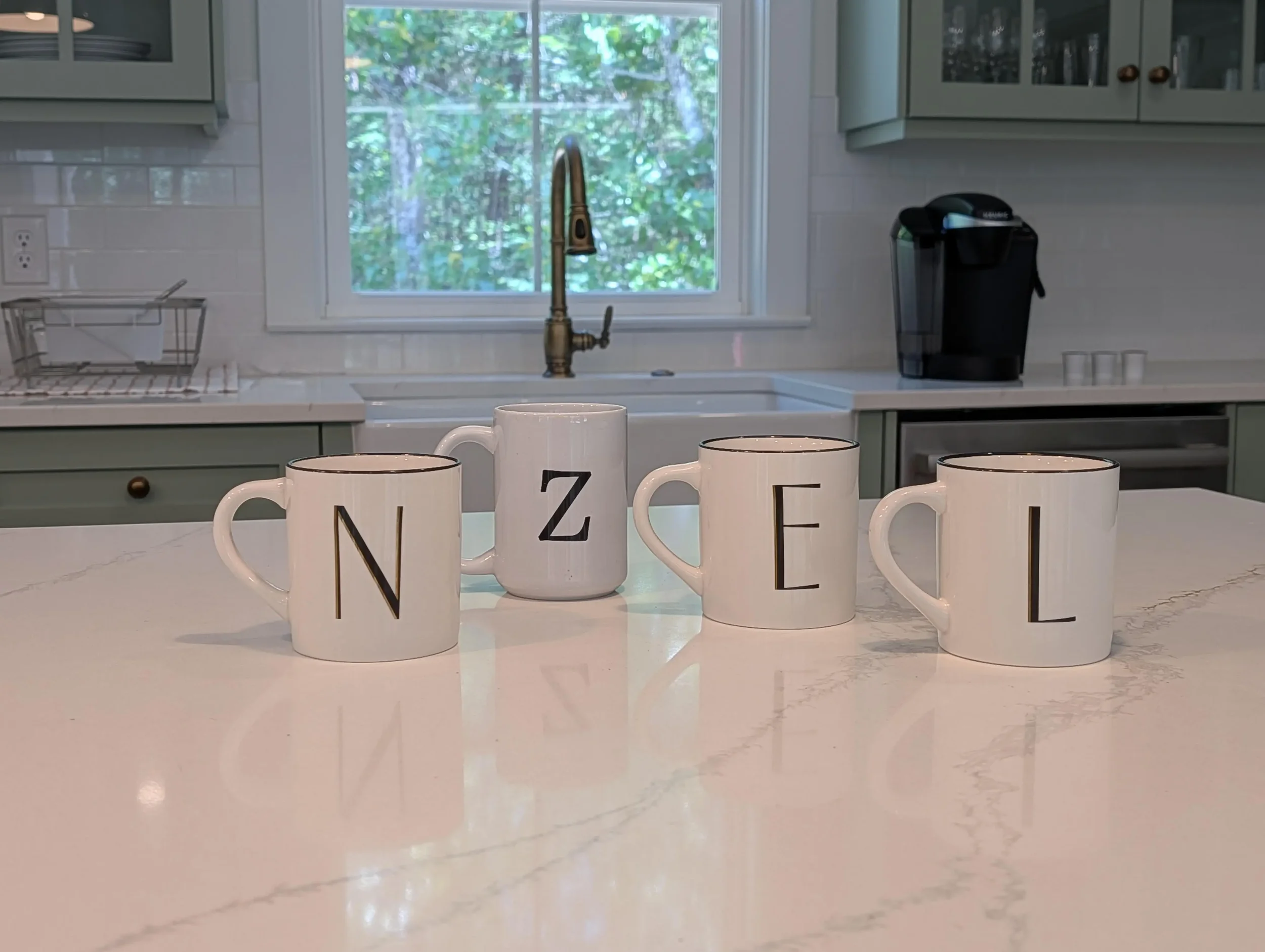
What Is Net Zero Energy Living? A Beginner's Guide
It All Begins Here
If you've been hearing the phrase 'net zero energy' lately and wondering what it actually means in plain English, you're in good company. It sounds technical, maybe even expensive, maybe even a little preachy. It's none of those things. Net zero energy living simply means your home produces as much energy as it consumes over the course of a year. Your electric bill doesn't just get smaller — it disappears. In the best months, your utility company owes you money.
The concept isn't complicated. You install enough solar panels to generate electricity, you design the home smartly enough to use that electricity efficiently, and you stop writing checks to the power company. You're still connected to the grid, which acts as your backup and your bank. When your panels produce more than you need, you sell it back. When they produce less, you draw from the grid. At the end of the year, the math works out to zero — or better.
At NZEL, I built a 1,846 square foot solar farmhouse in Waxhaw, North Carolina to prove exactly this. Thirty-three south-facing solar panels, a Tesla Powerwall battery backup, and thoughtful passive solar design. The result? From April 2025 through March 2026, our utility company owed us $696.41. I ran the air conditioning at 72 degrees all summer. We heated the house through winter. I charged my EV. And I still came out ahead.
Net zero energy living isn't a sacrifice. It's not smaller, darker, or less comfortable than a conventional home. In fact, our solar farmhouse has a great room that is 40% of the house, a 280-square-foot front porch, and feels considerably larger than its square footage suggests. The difference is that when the power bill comes, there isn't one.
If you're in the greater Charlotte, NC area and want to see what this looks like in person, we offer free tours of the home. There's no sales pitch — just a real house, real data, and real answers to your questions. Come see it for yourself.